

Gorilla trekking is a privilege, not a right. Respect, patience, and awareness define a successful encounter. Every rule exists to protect a species that stands on the edge of survival.
By following these guidelines, visitors become active partners in conservation and help secure a future for mountain gorillas in the wild.
The Mandatory Pre-Trek Briefing
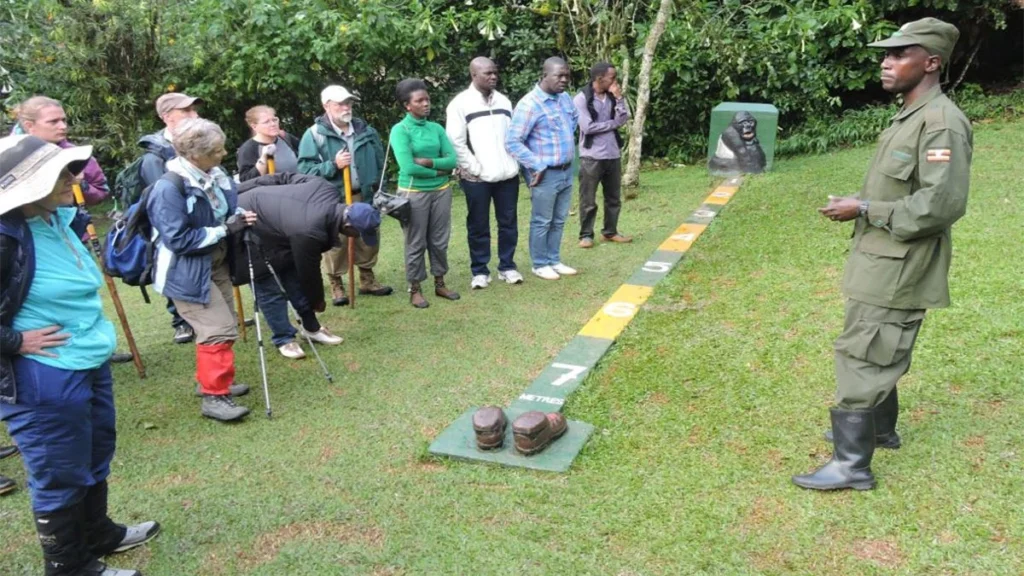
Every gorilla trek begins with a compulsory briefing at the park headquarters. Rangers explain gorilla behavior, safety procedures, health protocols, and movement rules inside the forest. Attendance is mandatory for all trekkers without exception.
During the briefing, visitors are assigned to specific gorilla families and trekking groups. Rangers also demonstrate how to behave if a gorilla charges, approaches closely, or displays dominance. This preparation reduces fear, prevents panic, and sets expectations for respectful conduct.
Health Rules and Disease Prevention
Visitors showing any signs of illness are not allowed to participate in gorilla trekking. This includes coughs, flu symptoms, fever, diarrhea, or respiratory infections. Gorillas have no immunity to many common human illnesses, and outbreaks can be fatal.
Honesty is critical. Rangers may deny participation even if symptoms appear mild. This decision protects the gorillas and the long-term success of conservation efforts. Face masks may be required in some situations to reduce disease transmission risk.
Group Size Control and Time Limits
Only a limited number of visitors are allowed to visit each gorilla family per day. This strict control minimizes stress and prevents gorillas from becoming overwhelmed by human presence.
During standard gorilla trekking, visitors are allowed one hour with the gorillas once they are located. During the gorilla habituation experience, visitors may spend up to four hours under close ranger supervision. These limits are enforced strictly and monitored by park staff.
Maintaining the Required Distance
Visitors must maintain a minimum distance of seven meters from the gorillas at all times. This rule reduces disease transmission and prevents gorillas from feeling threatened.
If gorillas move closer on their own, visitors must remain calm, avoid stepping forward, and follow ranger instructions. Backing away slowly may be required. Touching or attempting to interact is strictly prohibited.
Proper Behavior Inside the Gorilla Viewing Area
Calm behavior defines responsible gorilla trekking. Visitors must move slowly, speak softly, and avoid sudden gestures. Loud voices, pointing, or emotional reactions can alarm gorillas and trigger defensive behavior.
Rangers often instruct visitors to crouch or sit to appear smaller and less threatening. Standing tall or blocking a gorilla’s path should be avoided at all times.
Eye Contact and Gorilla Body Language
Direct eye contact can be interpreted as a challenge by gorillas, especially dominant silverbacks. Visitors should avoid prolonged staring and instead keep their gaze relaxed and indirect.
Rangers continuously read gorilla body language. Signs such as chest beating, vocalizations, or mock charges require immediate compliance with ranger instructions. Remaining calm is essential.
No Touching Under Any Circumstances
Touching gorillas is strictly forbidden, even if a gorilla approaches or brushes past you. Physical contact can transmit disease, disrupt behavior, and cause long-term stress.
If a gorilla comes very close, visitors must remain still and allow rangers to manage the situation. Any attempt to touch, pet, or reach out results in immediate removal from the trek.
Eating, Drinking, and Smoking Rules
Eating, drinking, or chewing gum inside the gorilla viewing area is not allowed. Food smells can attract gorillas and alter their natural behavior.
Smoking is prohibited throughout the trek due to fire risk and health concerns. Snacks and water may only be consumed during breaks away from the gorillas, as guided by rangers.
Photography Rules and Ethical Practice
Photography is permitted, but flash photography is strictly prohibited. Flash can frighten gorillas and provoke stress or aggression.
Visitors should keep camera movements slow and quiet. Continuous clicking, rushing for angles, or stepping closer for better shots is not allowed. Rangers guide positioning to ensure safety while protecting gorilla comfort.
Respecting Ranger Authority
Rangers hold full authority during gorilla trekking. Their instructions must be followed immediately and without argument. They continuously assess gorilla behavior and environmental conditions.
Rangers may shorten viewing time, reposition the group, or end the encounter early if they sense stress or danger. These decisions prioritize gorilla welfare over visitor expectations.
Environmental Responsibility and Waste Management
Nothing should be left inside the forest. All litter, including biodegradable items, must be carried out.
If visitors need to relieve themselves, rangers provide instructions on proper burial methods at safe distances. This prevents contamination and protects the fragile forest ecosystem.
Dress Code and Scent Awareness
Neutral-colored clothing helps gorillas feel less threatened. Bright colors, bold patterns, and reflective materials should be avoided.
Strong perfumes, deodorants, or scented lotions are discouraged. Gorillas have a strong sense of smell, and unfamiliar scents can cause agitation.
The Role of Porters and Respectful Interaction
Hiring a porter is encouraged and supports local livelihoods. Porters assist with carrying bags, navigating difficult terrain, and maintaining balance on steep slopes.
Visitors should treat porters with respect and follow their guidance when necessary. Using a porter does not indicate weakness but smart preparation.
Age Restrictions and Visitor Suitability
Gorilla trekking is restricted to visitors aged 15 years and above. This rule ensures physical ability, emotional maturity, and compliance with safety instructions.
Exceptions are not allowed, regardless of experience or fitness.
Cultural and Conservation Responsibility
Gorilla trekking directly supports conservation and community development. Visitors should respect local customs, conservation fees, and park regulations.
Responsible behavior strengthens the link between tourism and gorilla protection, ensuring that local communities continue to benefit from conservation success.
Consequences of Breaking Gorilla Trekking Rules
Failure to follow rules can result in immediate removal from the trek without refund. Serious violations may lead to permanent bans from gorilla trekking activities.
Rules are enforced strictly to protect gorillas, rangers, and visitors while maintaining international conservation standards.