Gorilla Trekking Experience Personal Diary: A Day in the Forest
A gorilla trekking experience diary offers a different way to understand mountain gorilla trekking. Instead of presenting only facts about permits, preparation, trekking routes, or wildlife rules, a personal diary follows the journey as it unfolds. It captures the anticipation before entering the forest, the physical effort of hiking, the sounds of the rainforest, and the unforgettable moment when a gorilla family finally appears.
For many travelers, gorilla trekking becomes one of the most memorable experiences of an African safari. The adventure begins long before the first gorilla is seen. There is excitement during the early morning preparation, curiosity during the journey to the park headquarters, and nervous anticipation during the briefing. Once the trek begins, every sound and movement in the forest seems important.
This diary-style account follows a fictional first-time visitor through a typical gorilla trekking day in Uganda. It is written to help future travelers understand what the experience can feel like while remembering that actual trekking conditions, distances, weather, and gorilla encounters vary from one visit to another.
The Night Before the Trek
I barely slept the night before my gorilla trek.
Everything I needed was already packed, but I kept checking my backpack as though something important might suddenly disappear. My waterproof jacket was there. My hiking boots were ready beside the door. I had water, snacks, gloves, a camera, and a few other essentials packed away.
The excitement made it difficult to relax.
For months, I had imagined what it would feel like to see mountain gorillas in their natural environment. Photographs and documentaries had given me an idea of what they looked like, but photographs could not tell me what it would feel like to stand in a rainforest surrounded by these animals.
I knew that the trek could be physically demanding. I also knew that the gorillas moved freely through the forest, meaning nobody could guarantee exactly where we would find them.
Eventually, I stopped checking my bag and tried to sleep.
Tomorrow would be the day.
The Early Morning Start
I woke before sunrise.
The forest was still quiet, and the cool morning air made it difficult to believe that I was about to begin one of the biggest adventures of my trip. After breakfast, I prepared my final belongings and left for the park headquarters.
Other travelers were arriving with the same mixture of excitement and nervousness. Some were experienced hikers, while others, like me, were wondering exactly how difficult the forest would be.
At the headquarters, we completed the necessary preparations and attended the trekking briefing. The guides explained what we should expect and reminded us that the gorillas were wild animals living in their natural habitat.
The briefing made the experience feel real.
Until that moment, gorilla trekking had been something I had read about and watched in videos. Now I was standing at the starting point with my boots on, waiting to enter the forest.
Entering the Forest
The first few minutes felt easier than I expected.
The trail led us beneath a thick canopy, and the sounds of the outside world gradually disappeared. Birds called from somewhere above us. Leaves moved in the breeze. Occasionally, I could hear insects buzzing around the vegetation.
The forest seemed alive in every direction.
Our guide walked ahead while trackers searched for signs of the gorilla family. We followed carefully, stepping over roots and around plants.
I quickly realized that gorilla trekking was not simply a matter of walking along a comfortable tourist trail. The terrain could become uneven, slippery, and steep. At some points, I had to concentrate entirely on where I placed my feet.
The forest demanded attention.
Yet I enjoyed that feeling. Every difficult section reminded me that I was entering a genuinely wild environment rather than visiting an ordinary wildlife enclosure.
The Trek Gets More Difficult
After some time, I began to understand why travelers recommend preparing physically for gorilla trekking.
The trail became steeper, and the ground was sometimes muddy. My boots became heavier as soil collected around them. I stopped occasionally to drink water and catch my breath.
Nobody seemed to mind taking a short rest.
The guides understood the pace of the group and continued monitoring the situation. Our trackers were focused on locating the gorilla family, studying signs, and following clues that were invisible to an inexperienced visitor like me.
I began wondering how they could possibly know where the gorillas had gone.
Then one of the trackers stopped.
The atmosphere immediately changed.
The Moment We Found the Gorillas
The guide quietly signaled that we were getting close.
Suddenly, the hours of hiking felt completely different.
We moved more carefully and kept our voices low. I looked through the vegetation, trying to see something that resembled the animals I had seen in photographs.
Then I saw movement.
At first, I could not believe what I was looking at.
A gorilla was sitting among the vegetation.
For several seconds, I simply stood there.
The animal looked completely comfortable in its surroundings. It was not performing for visitors or posing for cameras. It was simply living its life in the forest.
That realization affected me more than I expected.
I had spent months thinking about seeing a mountain gorilla, but the reality was much more powerful than the photographs had suggested.
Meeting the Silverback
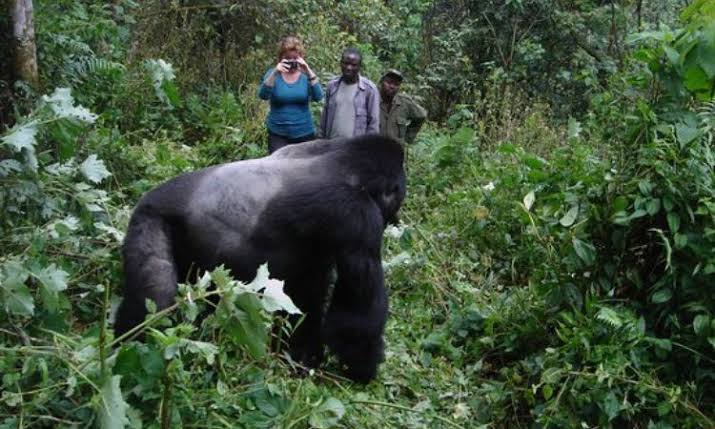
A few moments later, we noticed the silverback.
His size immediately caught my attention.
He was powerful without appearing aggressive. He moved calmly through the vegetation, occasionally looking in our direction before continuing what he was doing.
I remembered the instructions from the briefing and resisted the temptation to stare continuously at him.
The guide reminded us to remain calm and follow the group’s instructions.
The silverback eventually settled down nearby.
I raised my camera, took a few photographs, and then lowered it again.
For the first time that day, I realized that I did not want to experience everything through a camera screen.
I wanted to watch.
Watching the Gorilla Family
The longer we stayed, the more interesting the gorilla family became.
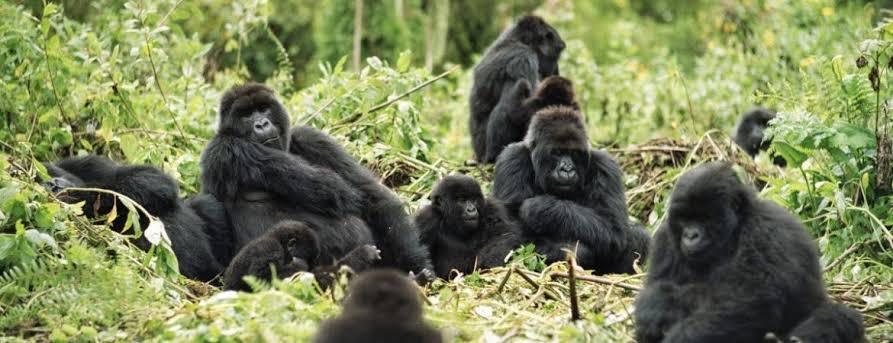
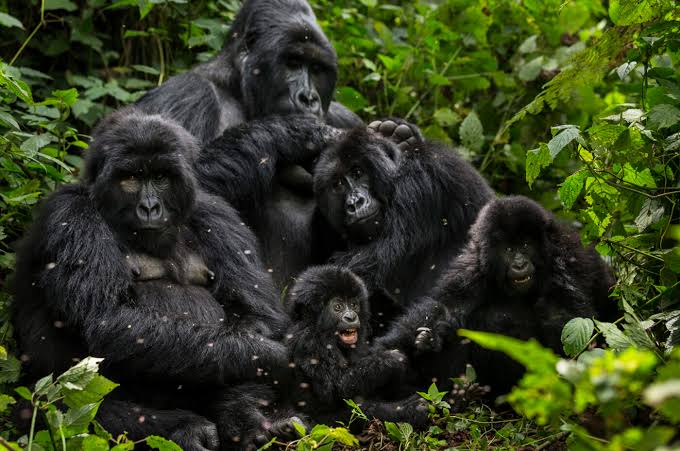
Different individuals were doing different things. Some were feeding. Others were resting. A younger gorilla moved through the vegetation while another individual remained nearby.
The family did not seem particularly concerned about us.
That was one of the most fascinating aspects of the encounter. The gorillas were not there for our entertainment. We were temporary visitors observing their natural behavior.
Occasionally, a gorilla moved closer or changed position, and everyone in our group became extremely quiet.
Every few minutes seemed special.
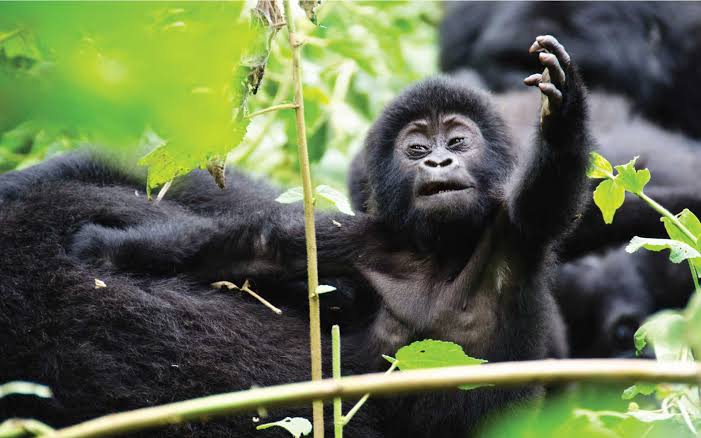
I began paying attention to details I might normally have missed. A hand moving through leaves. A change in posture. A quiet vocalization. The expression on a gorilla’s face.
The encounter felt less like watching a performance and more like being allowed a brief window into another society.
When the Camera Became Less Important
I had planned to take hundreds of photographs.
Instead, I took far fewer than expected.
The forest environment made photography challenging, and the animals often moved behind vegetation. Light levels changed constantly. Sometimes I could not get the photograph I wanted.
Eventually, I stopped worrying about getting the perfect image.
I realized that no photograph could completely reproduce the experience.
The sounds of the forest were part of the memory. So was the smell of wet vegetation. So was the feeling of standing quietly while a family of mountain gorillas continued with its daily routine.
I took a few final photographs and put the camera away.
For those moments, I simply watched.
Saying Goodbye to the Gorillas
Eventually, it was time to leave.
The moment arrived sooner than I wanted.
I knew before the trek that the gorilla encounter would be limited by the applicable visitor rules, but knowing something intellectually does not make leaving emotionally easier.
We slowly moved away from the gorilla family.
I looked back several times.
The animals continued their day as though nothing unusual had happened.
Perhaps that was the most beautiful part.
For us, the encounter was one of the biggest moments of our trip. For the gorillas, it was simply another day in the forest.
That contrast made me appreciate the importance of responsible wildlife tourism.
The Journey Back
The return journey felt completely different.
The trail was still difficult, but I no longer thought about how tired I was. My mind was filled with everything I had just seen.
The conversations among the travelers changed too.
Everyone had a favorite moment.
One person talked about the silverback. Another remembered a young gorilla. Someone else was excited about a photograph they had managed to capture.
I realized that everyone had experienced the same trek differently.
The forest had given each person a different memory.
Back at the Park Headquarters
When we finally returned, I felt exhausted but strangely energized.
My boots were dirty. My clothes were no longer as clean as they had been that morning. My legs were tired from the hike.
But none of that mattered.
I had entered the forest wondering whether the experience would live up to the expectations created by photographs and documentaries.
It had exceeded them.
The physical challenge was real, but the encounter had made every difficult section worthwhile.
The day had also changed the way I thought about wildlife. Seeing gorillas in their natural habitat made it easier to understand why protecting their forests matters.
What I Learned From the Experience
The biggest lesson from my gorilla trekking experience diary was that preparation matters, but flexibility matters just as much.
You can prepare your clothes, boots, camera, water, and physical fitness. You can research the park and read other travelers’ experiences. But you cannot control where the gorillas will be, how long the hike will take, or exactly what behavior you will witness.
That uncertainty is part of the adventure.
I also learned that gorilla trekking should never become a competition to get the closest photograph or the most dramatic video. The animals deserve space and respect.
The experience becomes more meaningful when you remember that you are visiting their home.
Would I Do Gorilla Trekking Again?
Without hesitation, yes.
I would prepare differently next time. I would spend more time training before the trip, organize my camera equipment more carefully, and perhaps carry less unnecessary gear.
But I would also try to preserve the same sense of anticipation.
There is something special about not knowing exactly what awaits you beyond the next section of forest.
You may hike for hours before seeing the gorillas. You may encounter rain. You may get muddy. You may become tired.
Then, suddenly, you find yourself looking at a mountain gorilla in the middle of the forest.
That moment can make everything else disappear.
Final Thoughts From the Diary
Looking back, I do not remember the trek simply as a hike.
I remember the anticipation before sunrise. I remember the sound of the forest. I remember the difficult slopes and muddy trail. I remember the moment the tracker stopped and signaled that we were close.
Most of all, I remember the first time I saw a gorilla sitting quietly among the vegetation.
The experience reminded me that some journeys are valuable because they take us somewhere physically, while others change the way we see the world.
Gorilla trekking did both.
It took me deep into the forest, and it left me with a much greater appreciation for mountain gorillas and the people working to protect them.
For anyone planning their own trek, my advice would be simple: prepare well, respect the forest, listen to your guides, and leave room for the unexpected.
The best part of a gorilla trekking experience may be the moment you never planned for.
Frequently Asked Questions
What does a gorilla trekking experience feel like?
Gorilla trekking can feel exciting, challenging, and emotional. The experience combines hiking through a natural forest with the anticipation of finding a gorilla family. The difficulty and duration vary depending on the location of the gorillas and the conditions on the day.
Is gorilla trekking physically difficult?
It can be. Trails may involve steep slopes, uneven ground, mud, dense vegetation, and changing weather. Physical preparation can make the experience more comfortable, although trekking difficulty varies from one day to another.
What is the most memorable part of gorilla trekking?
For many travelers, the first sighting of a mountain gorilla becomes the highlight. However, the forest hike, tracker experience, scenery, and anticipation can also become important parts of the overall memory.
Should I take a camera while gorilla trekking?
A camera can help preserve memories, but it should not become the focus of the experience. Travelers should follow all photography rules and their guide’s instructions while prioritizing responsible wildlife observation.
Can I write my own gorilla trekking diary?
Yes. A personal diary can be a great way to record the journey. Include details about your preparation, the forest, the trek, memorable wildlife encounters, your emotions, and what you learned about conservation.