
Packing well prepares you physically and mentally for chimpanzee trekking. The right clothing, footwear, and essentials protect you from the forest while allowing full focus on the experience. When you feel comfortable and prepared, every step becomes easier, and every encounter feels richer.
Chimpanzee trekking challenges you, but proper packing turns that challenge into an unforgettable adventure.
Understanding the Trekking Environment
Chimpanzee trekking happens in humid tropical forests with thick vegetation, slippery ground, and frequent elevation changes. You walk for several hours while tracking fast-moving primates. Rain can fall unexpectedly, even during dry seasons. Insects, thorny plants, and muddy trails form part of the environment.
Your packing list should protect you from moisture, sun, insects, and physical strain without weighing you down. Light, functional, and breathable items work best.
Clothing to Wear for Chimpanzee Trekking
Clothing should prioritize protection and comfort over style. Long-sleeved shirts protect arms from scratches, insects, and sun exposure. Lightweight trekking trousers shield legs from thorny undergrowth and stinging plants. Neutral colors like green, brown, or khaki blend into the forest and reduce disturbance to wildlife.
Quick-drying fabrics perform far better than cotton. Forest humidity causes sweat buildup, and rain showers can soak clothing quickly. Breathable materials help regulate body temperature during long walks.
Footwear: Your Most Important Item
Footwear plays the most critical role in chimpanzee trekking. Sturdy hiking boots with good ankle support protect against slips, twisted joints, and uneven ground. Waterproof boots keep feet dry during stream crossings and muddy sections.
Good traction matters more than lightweight design. Forest trails often stay slick even during dry weather. Thick hiking socks reduce friction and prevent blisters during longer treks.
Rain Protection and Weather Gear
Rain gear remains essential year-round. A lightweight waterproof jacket protects against sudden downpours and helps retain warmth in shaded forest sections. Ponchos also work well, especially in warmer conditions where breathability matters.
A wide-brimmed hat or cap shields your face from sun and dripping canopy water. Sunglasses help during open trail sections but should fit securely to avoid falling during movement.
Daypack Essentials
A small, comfortable daypack allows you to carry essentials without restricting movement. It should sit snugly against your back and include adjustable straps for balance.
Inside your pack, carry enough drinking water to stay hydrated throughout the trek. Dehydration affects stamina quickly in humid environments. High-energy snacks such as nuts or energy bars help maintain strength during longer walks.
Health and Personal Items
Insect repellent protects against mosquitoes and forest insects. Choose a repellent suitable for tropical environments. Sunscreen remains useful for open trail sections and forest edges near water bodies.
Basic personal items include tissues, wet wipes, and hand sanitizer. These items improve comfort during long treks where facilities do not exist. Any personal medication should stay easily accessible.
Trekking Accessories That Make a Difference
Trekking poles provide stability on steep descents and muddy ground. They reduce strain on knees and improve balance, especially in slippery conditions.
Gloves protect hands when grabbing branches or navigating steep sections. Lightweight gardening or trekking gloves work well without adding bulk.
A small towel or bandana helps wipe sweat and rain from your face during humid treks.
Photography and Electronics
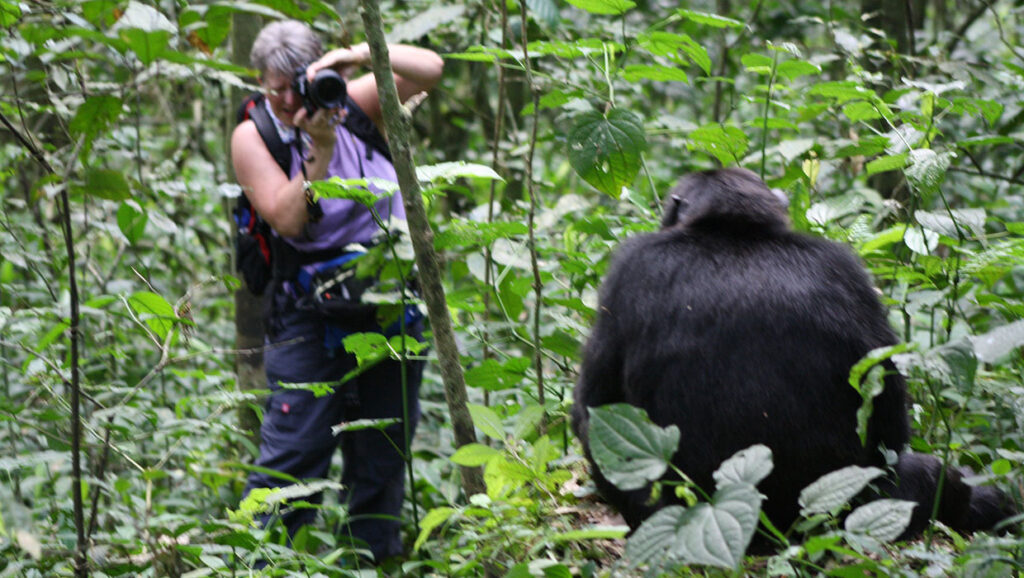
Cameras enhance the experience but require careful handling. Forest conditions involve low light, movement, and moisture. A camera with good low-light performance works best. Use a protective cover or dry bag to guard against rain and humidity.
Avoid flash photography, as it disturbs chimpanzees. Phones work for casual photos but should stay secured in waterproof cases or zip-lock bags.
What Not to Pack
Avoid heavy backpacks, unnecessary gadgets, or loud accessories. Strong perfumes or scented products can irritate wildlife and attract insects. Bright clothing and noisy items distract both animals and fellow trekkers.
Large tripods and bulky camera equipment slow movement and reduce flexibility on narrow trails.
Packing Light but Smart
Chimpanzee trekking rewards efficiency. Carry only what you need and nothing more. A lighter pack reduces fatigue and allows you to move more freely through the forest. Guides often assist with advice on what to bring based on daily conditions.