

A chimpanzee trekking day combines physical activity, learning, and emotional connection. It demands effort, patience, and respect, but rewards travelers with one of Africa’s most authentic wildlife experiences.
When you understand the flow of the day and approach it with curiosity, every step becomes part of a meaningful journey rather than just a walk in the forest.
Early Morning Start and Arrival at the Trekking Point
A chimpanzee trekking day usually begins early in the morning. You arrive at the park headquarters or designated trailhead shortly after sunrise. Early starts increase the chances of locating chimpanzees while they remain active and closer to known feeding areas.
At arrival, staff register participants and confirm permits. Guides assess group size, fitness levels, and weather conditions before assigning trackers. This process ensures safety and smooth coordination throughout the trek.
Pre-Trek Briefing by Rangers and Guides
Before entering the forest, rangers conduct a detailed briefing. They explain trekking rules, safety guidelines, and expected behavior around chimpanzees. This briefing sets the tone for responsible tracking and respectful wildlife viewing.
Guides also outline what the forest conditions look like that day. They explain recent chimpanzee movements, estimated trekking duration, and terrain challenges. This information helps you mentally prepare for the walk ahead.
Entering the Forest and Beginning the Trek
Once the briefing ends, the group enters the forest with guides and trackers leading the way. The pace starts steady and adjusts based on terrain and chimpanzee location. Trails may feel narrow, uneven, and shaded, with roots, mud, and gentle slopes shaping movement.
Along the way, guides point out forest features, animal tracks, and plant species. You begin to hear forest sounds more clearly as voices lower and attention sharpens. This phase builds anticipation as trackers listen for chimpanzee calls or movement.
Tracking the Chimpanzees
Chimpanzee tracking involves active listening and constant adjustment. Trackers communicate quietly, often stopping to confirm direction or listen for vocalizations. Chimpanzees announce their presence through loud calls, drumming, and movement in the canopy.
The trek may involve changes in direction or brief bursts of faster walking if chimpanzees move suddenly. Patience matters here. Some days bring quick sightings, while others require longer pursuit before the first glimpse.
The Moment You Find the Chimpanzees
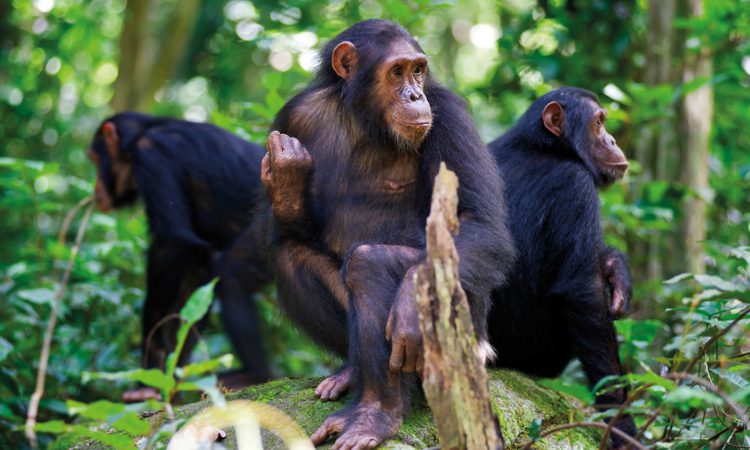
The moment you encounter chimpanzees feels powerful and intense. You may see them feeding in trees, grooming on the ground, or moving rapidly through branches. Guides position the group at a safe distance and remind everyone to stay calm and quiet.
Chimpanzees remain unpredictable. They may stay visible for extended periods or move away quickly. You follow their movement slowly, guided by trackers who anticipate behavior and maintain respectful distance.
Time Spent Observing the Chimpanzees
Once contact begins, viewing time usually lasts up to one hour. During this period, guides interpret behavior, social interactions, and vocal communication. You witness complex relationships, dominance displays, and family bonds unfold naturally.
Photography remains allowed without flash, but observation takes priority. Many travelers find that watching without constant camera use deepens the experience and emotional connection.
Leaving the Chimpanzees and Exiting the Forest
When viewing time ends, guides signal a calm departure. Leaving quietly matters as much as arriving respectfully. The group retraces steps or follows an alternative route back through the forest.
The return walk often feels lighter. Conversations resume, and guides answer questions about chimp behavior, conservation, and forest ecology. This phase allows reflection and appreciation of what you just experienced.
Duration and Physical Demands of the Day
A full chimpanzee trekking experience typically lasts between two and four hours, though some days extend longer depending on chimp location. Walking involves uneven ground, humidity, and occasional steep sections.
The effort feels rewarding rather than exhausting for those who prepare properly. Frequent short pauses allow hydration and recovery, but steady movement remains part of the day.
Emotional and Sensory Experience
Chimpanzee trekking leaves a strong emotional impression. Hearing calls echo through the forest, making eye contact, and witnessing social behavior creates a sense of connection rarely matched by other wildlife encounters.
The forest engages all senses. You notice shifting light, earthy scents, and constant movement around you. Many travelers describe the experience as humbling, intense, and deeply memorable.
What Can Vary From One Trek to Another
No two chimpanzee trekking days feel the same. Weather, chimp behavior, group fitness, and forest conditions all influence the experience. Some treks feel fast and dynamic, while others unfold slowly and quietly.
Flexibility and realistic expectations shape satisfaction. The forest operates on its own rhythm, and success comes from embracing that unpredictability.