

Chimpanzees and mountain gorillas offer equally meaningful but very different encounters. Chimpanzees deliver energy, sound, and constant motion. Mountain gorillas deliver calm, presence, and emotional depth. Neither experience ranks above the other. The right choice depends on what you want to feel, see, and remember.
For travelers who value learning, connection, and conservation-focused travel, both experiences stand among Africa’s greatest wildlife encounters.
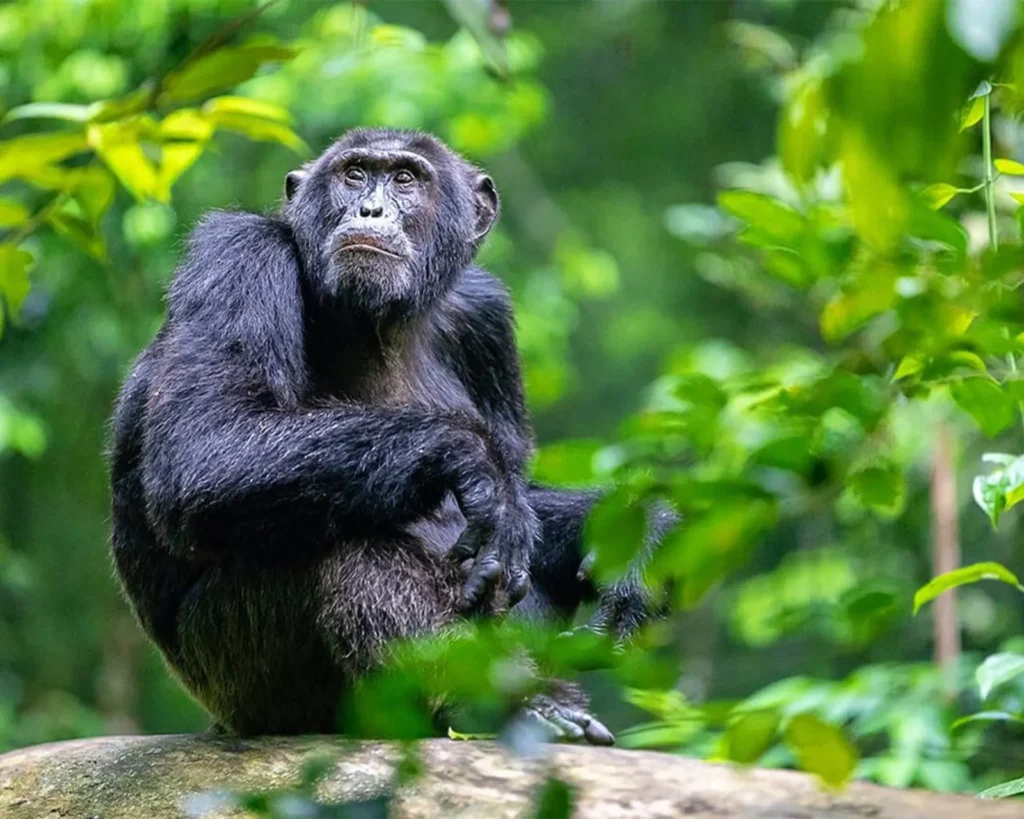
Species Behavior and Social Structure
Chimpanzees display fast-paced, energetic behavior. They move frequently, vocalize loudly, and interact in complex social ways. You often hear them before you see them. Once found, they may climb, feed, chase, or disappear into thick vegetation within minutes. This constant movement creates excitement and unpredictability.
Mountain gorillas behave in a calmer, more grounded way. Families stay together, led by a dominant silverback. Once trackers locate a group, they usually remain in one area for a longer time. Gorillas spend much of the hour feeding, resting, grooming, and interacting quietly. The experience feels intimate and deeply emotional.
Trekking Style and Physical Demand
Chimpanzee trekking often feels more physically demanding. Chimps range widely in search of food, which means trekkers may walk longer distances and change direction frequently. Trails can feel steep, muddy, and uneven, especially in rainforest environments. You need stamina, balance, and patience.
Mountain gorilla trekking can range from moderate to challenging, depending on the gorilla family location. Once you reach the group, movement slows down. You usually stand or sit in one area while observing. The physical effort concentrates in the hike itself rather than constant pursuit.
Forest Environment and Scenery
Chimpanzee habitats usually consist of dense tropical rainforest, riverine forest, or montane forest. Visibility can feel limited due to thick undergrowth and tall canopy. The forest feels alive with sound, movement, and birdlife. Encounters often happen overhead or at mid-canopy level.
Mountain gorillas live in higher-altitude forests with bamboo zones, misty slopes, and open undergrowth in some areas. Visibility often feels better once you reach the gorillas. The setting feels dramatic and serene, shaped by altitude, cool air, and volcanic landscapes.
Viewing Experience and Time with Wildlife
Chimpanzee encounters feel dynamic and fast-moving. You may spend time watching from different angles as chimps move through trees and forest clearings. Photography requires quick reactions and flexible positioning.
Mountain gorilla encounters feel slower and more immersive. Once the hour begins, you remain close to the family. Gorillas often move around you rather than away from you. Photography feels easier, and emotional connection often runs deeper due to prolonged eye-level observation.
Group Size and Human Interaction
Chimpanzee trekking groups often include several trekkers, trackers, and researchers moving through the forest together. The pace can feel active and coordinated, with frequent stops to listen and adjust direction.
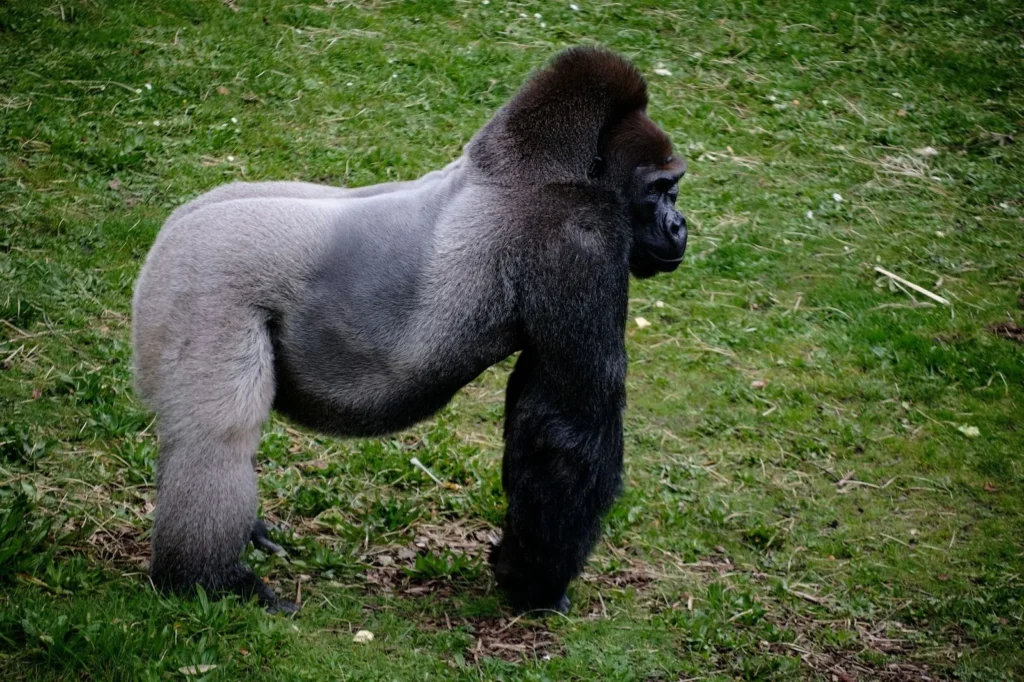
Mountain gorilla trekking groups remain tightly controlled, usually limited to a small number of visitors per family. The experience feels quieter and more personal. Silence plays an important role, allowing natural behavior to unfold without disturbance.
Best Time to Trek Each Species
Chimpanzee trekking works best during drier months, when forest trails remain manageable and chimp movements become more predictable. Wet seasons bring lush scenery but increase difficulty.
Mountain gorilla trekking also favors dry seasons, though gorilla tracking remains possible year-round. Cooler temperatures at higher elevations can make trekking comfortable even during warmer months.
Cost and Permit Considerations
Chimpanzee trekking permits generally cost less than mountain gorilla permits. This makes chimpanzee trekking a strong option for travelers seeking primate encounters with lower overall costs.
Mountain gorilla trekking permits cost more due to strict conservation limits and high demand. The price reflects long-term protection efforts and controlled visitor numbers. Many travelers consider the experience worth the investment due to its emotional impact.
Who Should Choose Chimpanzees
Chimpanzee trekking suits travelers who enjoy active exploration, movement, and raw forest energy. It appeals to those interested in social behavior, communication, and dynamic wildlife encounters. Travelers with good fitness and flexible expectations often find chimpanzee trekking deeply rewarding.
Who Should Choose Mountain Gorillas
Mountain gorilla trekking suits travelers seeking emotional connection, calmer observation, and iconic wildlife moments. It works well for photographers, first-time Africa visitors, and those who value depth over movement. Travelers willing to invest more for a once-in-a-lifetime encounter often choose gorillas.
Can You Do Both Experiences?
Many travelers choose to combine chimpanzee trekking and mountain gorilla trekking within one itinerary. Doing both highlights how different these primates truly are. The contrast enriches understanding and creates a more complete primate safari experience.