
Ivindo National Park: Gabon’s Untouched Rainforest Wilderness
Ivindo National Park stands among the most pristine rainforest protected areas in Africa. Located in northeastern Gabon, the park preserves vast tracts of primary Congo Basin forest that human activity has barely touched. Travelers who venture here experience raw wilderness, powerful rivers, and deep ecological richness rather than polished safari circuits. Ivindo rewards curiosity, patience, and a genuine interest in nature.
This park suits explorers who value authenticity. It does not promise frequent wildlife sightings from vehicles. Instead, it delivers immersion, silence, and discovery inside one of Earth’s oldest rainforest systems.
Location and Setting in Northeastern Gabon
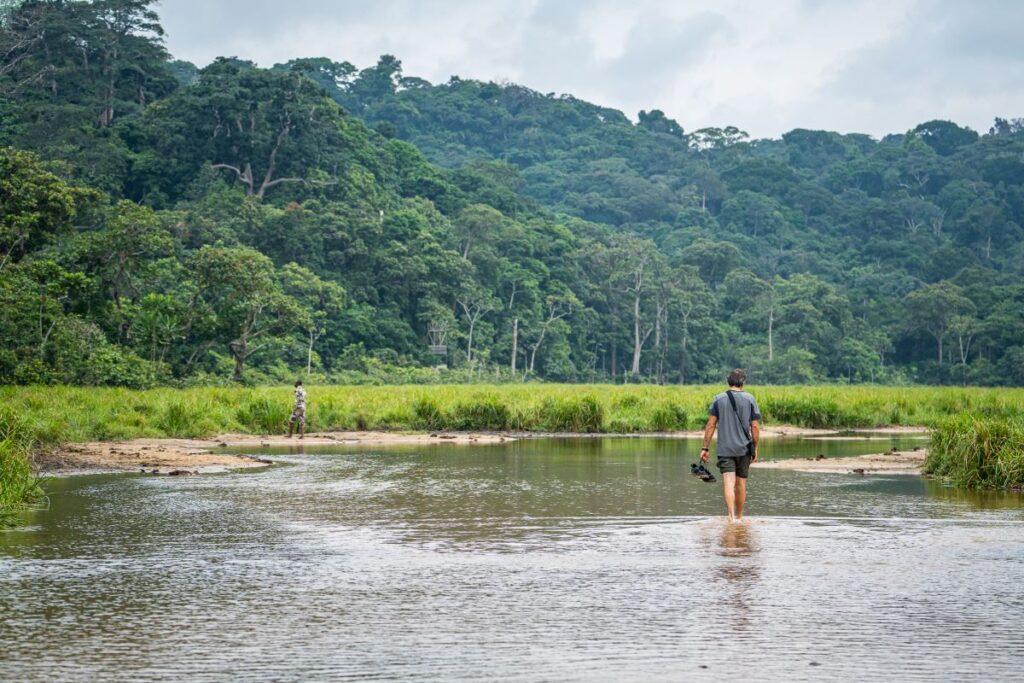
Ivindo National Park stretches across Ogooué-Ivindo Province, near the remote town of Makokou. The park covers roughly 3,000 square kilometers of dense equatorial forest intersected by the Ivindo River. This region forms part of the greater Congo Basin, the second-largest rainforest on the planet.
The isolation defines Ivindo’s character. Limited road access, low population density, and strict protection have allowed ecosystems to evolve naturally. When you enter the park, modern life fades fast. Forest sounds, rushing water, and shifting light dominate your senses.
Landscape and Natural Features
Ivindo’s landscape feels dramatic and ancient. Towering hardwood trees create a closed canopy that filters sunlight into soft green hues. Granite outcrops rise through the forest, shaping river channels and waterfalls. The Ivindo River cuts through the park with force, carving rapids and cascades that define the area’s identity.
Kongou Falls represents the park’s most iconic feature. These falls thunder through a narrow rocky channel, sending mist high above the forest. Few visitors ever reach them, which adds to their mystique. Djoumou Falls, smaller but equally remote, offer another powerful reminder of the park’s raw energy.
Wildlife of Ivindo National Park
Ivindo shelters remarkable biodiversity, though animals remain elusive due to thick vegetation. The park protects forest elephants that move quietly through dense undergrowth, shaping trails and seed dispersal patterns. Western lowland gorillas and chimpanzees inhabit remote forest zones, where researchers and trackers monitor their movements.
Other mammals include forest buffalo, sitatunga antelope, and African golden cats. Birdlife thrives here, with more than 430 recorded species. African grey parrots, hornbills, and rare forest specialists fill the canopy with sound. In Ivindo, wildlife encounters feel personal and earned, never staged.
Activities and Experiences in Ivindo
Ivindo focuses on exploration rather than entertainment. Guided forest walks form the core experience. Skilled local guides interpret tracks, plants, insects, and primate signs, turning each walk into a living lesson in rainforest ecology.
River exploration adds another dimension. Traveling by boat along the Ivindo River reveals hidden forest edges where monkeys, birds, and elephants sometimes appear. Waterfall expeditions require effort and planning, but they deliver unmatched rewards. Reaching Kongou Falls often involves multi-day journeys that combine river travel, hiking, and wilderness camping.
Birdwatching draws specialists from around the world. Ivindo ranks among Central Africa’s most important birding sites. Researchers and conservation travelers also visit the park to study untouched rainforest systems in real time.
Best Time to Visit Ivindo National Park
Ivindo welcomes visitors throughout the year, but seasonal changes shape the experience. Drier months from June to September and December to February allow easier forest movement and river navigation. Trails remain firmer, and humidity drops slightly.
Rainy seasons from March to May and October to November transform the forest. Vegetation thickens, insects increase, and travel becomes challenging. Waterfalls reach peak power during these months, creating dramatic scenery for adventurous travelers who accept the conditions.
Accommodation and Access
Ivindo does not offer luxury lodges or permanent safari camps. Accommodation remains simple and practical, often based in Makokou or temporary research-style camps closer to the park. Travelers should expect basic comfort, local meals, and close contact with nature.
Access usually involves domestic flights or long road journeys from Libreville, followed by river transport and guided entry. Because logistics remain complex, experienced operators handle planning, permits, and safety arrangements.
Conservation Importance of Ivindo National Park
Ivindo plays a critical role in Gabon’s conservation strategy. The park protects intact rainforest corridors that support large mammals and maintain regional climate balance. Scientists use Ivindo as a reference site for studying undisturbed forest systems, which helps guide conservation policies across Central Africa.
Tourism here remains low-impact and conservation-driven. Every visit supports research, park management, and local employment while reinforcing the value of preserving wilderness in its natural state.
Why Ivindo National Park Stands Apart
Ivindo does not cater to casual tourism. It attracts travelers who seek depth, silence, and meaning. The park offers a rare chance to experience Africa before mass tourism shaped its landscapes. For those willing to go further and slow down, Ivindo delivers one of the continent’s most authentic rainforest experiences.